Insights · Digital Marketing
Digital Marketing for Startups: A Practical Playbook
How early-stage startups should approach digital marketing with limited budget and unproven positioning.
By the Pinwheel team · · 751 words
Why the usual playbook doesn't fit startups
Most digital marketing advice assumes an established brand and settled positioning, neither of which an early startup usually has yet.
Start smaller than feels comfortable
Test search engine optimization (SEO) at a small scale before committing serious budget, the goal early on is signal, not volume.
What to measure instead of vanity metrics
Track whether the activity is producing a repeatable, affordable path to a real customer, not just traffic or impressions.
When to scale it up
Once digital marketing shows a consistent, profitable pattern across more than one test, it's usually safe to commit meaningfully more budget.
A common early-stage mistake
Spreading a small budget across too many channels at once, rather than proving one works first, is the most common way early-stage budgets get wasted.
The channels that carry most of the work
In a typical digital marketing program, Google Search & Display and Meta (Facebook & Instagram) Ads carry most of the day-to-day activity, while LinkedIn Ads and Organic search (SEO) tend to support specific parts of the funnel rather than running as standalone efforts. Understanding which tool is doing which job makes it much easier to diagnose a program that isn't performing, rather than assuming the whole approach needs to change when usually only one piece does.
How the pieces fit together
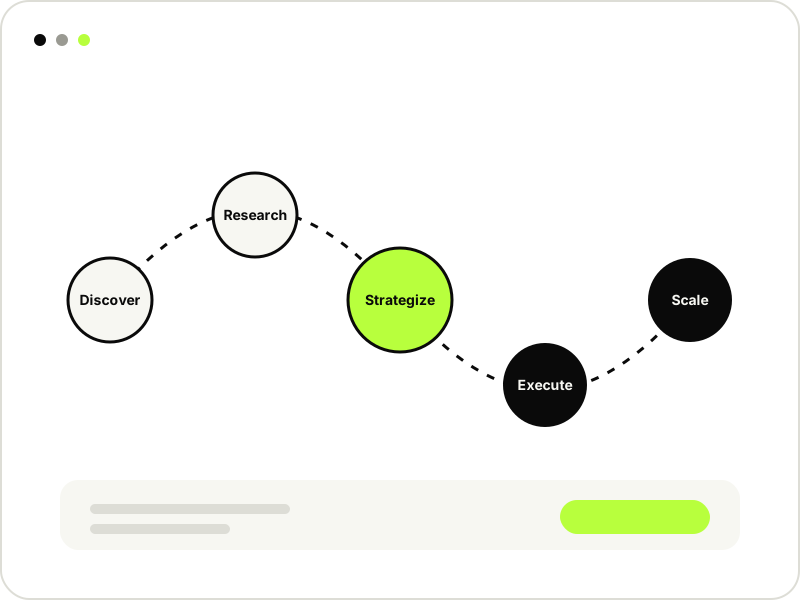
Search engine optimization (SEO) and Paid search and social advertising usually come first, since later work depends on getting them right. Content strategy and creation and Marketing automation and email build on that foundation, and are where most of the ongoing, month-to-month effort tends to go once the initial setup is in place. Skipping the order and jumping straight to the later pieces is one of the more common reasons digital marketing underperforms relative to the effort put into it.
Which digital marketing channel should I start with?
It depends on where your customers already are. B2B and considered purchases usually benefit from SEO and LinkedIn first; e-commerce and D2C brands often see faster wins from paid social and performance marketing.
How long does digital marketing take to show results?
Paid channels can generate leads within days of launch. Organic channels like SEO and content typically take three to six months to build meaningful, compounding traffic.
Do I need a website before starting digital marketing?
A website or landing page is strongly recommended, since most campaigns need somewhere to send traffic that can capture enquiries. We can advise on a minimum-viable setup if you don't have one yet.
How do you measure digital marketing success?
We agree on business metrics upfront — cost per lead, cost per acquisition, return on ad spend, or organic traffic and rankings — and report against those, not just impressions or likes.
How this connects to Performance Marketing
Digital Marketing rarely works in isolation. It's closely connected to performance marketing. Marketing you only pay for when it produces a measurable result. Businesses that plan the two together, rather than treating them as separate budgets and separate teams, tend to get more out of both.
How this looks in Healthcare
In healthcare, digital marketing typically has to account for advertising restrictions and regulatory guidelines around medical claims, which shapes both the channel mix and the pace of the program compared with a generic playbook applied to any business regardless of sector.
Where Digital Marketing sits in a full marketing plan
Digital Marketing rarely operates as a standalone effort inside a mature marketing program. It usually feeds data to, and draws budget decisions from, whatever else is running alongside it, so the businesses that get the most out of digital marketing are the ones who plan it as part of a wider system rather than a siloed line item with its own separate goals and its own separate reporting.
Signs it's working
The earliest reliable signal that digital marketing is on track usually isn't a headline metric moving, it's cleaner data: consistent tracking, a shrinking list of open questions about what's driving results, and a team that can explain, in plain language, why last month's numbers looked the way they did. The headline metric tends to follow once that foundation is solid.
Signs it's not working
The clearest warning sign isn't a bad month, individual months are noisy, it's a program where nobody can explain why performance moved, where the same questions keep coming up unanswered, or where more budget is proposed as the fix to every problem regardless of what the data actually shows.
FAQs
What does a digital marketing agency actually do?
A digital marketing agency plans, builds and manages your online presence across SEO, paid advertising, content and social channels, then reports on what drove real business results — leads, sales or signups — rather than vanity metrics.
How is digital marketing different from traditional marketing?
Traditional marketing (print, TV, hoardings) is one-directional and hard to measure. Digital marketing runs on channels where every click, view and conversion can be tracked, letting budget shift toward what is proven to work.