
Services
SEO Services
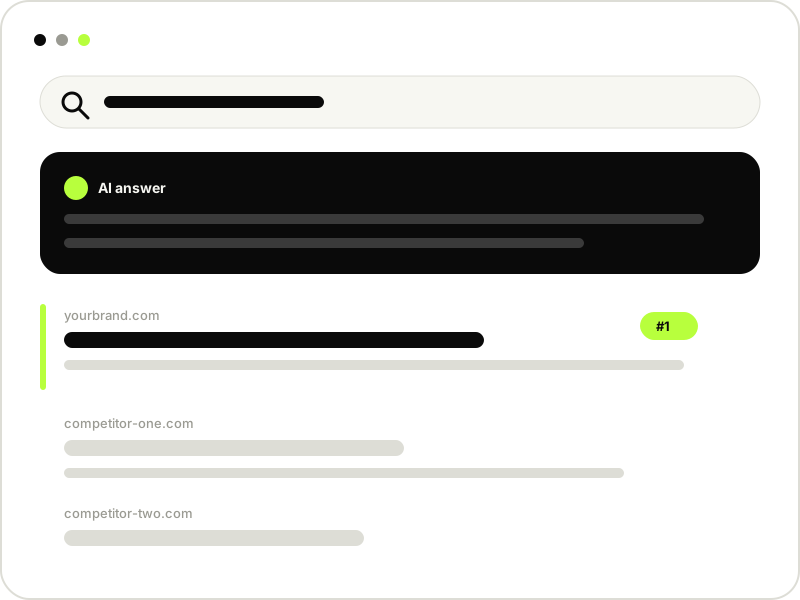
Rank higher on Google and turn organic search into your most reliable channel.
Introduction
Businesses choosing SEO need a partner who treats it as part of a full-funnel plan, not an isolated tactic. Pinwheel combines a documented process with transparent reporting so every rupee spent can be traced back to a business outcome.
Quick answer: Rank higher on Google and turn organic search into your most reliable channel. SEO (search engine optimization) improves a website's visibility in unpaid search results by fixing technical issues, structuring content around what people actually search for, and building the credibility signals search engines use to rank pages.
What Are SEO Services?
SEO (search engine optimization) improves a website's visibility in unpaid search results by fixing technical issues, structuring content around what people actually search for, and building the credibility signals search engines use to rank pages. Unlike paid ads, a well-optimized page keeps earning traffic long after the initial work is done.
Our SEO Services
Local SEO
Google Business Profile optimization, map-pack rankings and location-specific search visibility.
Technical SEO
Site speed, crawlability, indexing and Core Web Vitals fixes that let content actually rank.
On-Page SEO
Titles, headings, internal linking and content structured around real search intent.
Off-Page SEO
Backlinks, digital PR and citations that build the domain authority rankings depend on.
E-commerce SEO
Category and product page optimization built specifically for transactional search.
Content SEO
Keyword-mapped content that earns rankings by genuinely answering buyer questions.

Benefits of SEO
- A documented process covering everything from local seo to content seo, not ad hoc tactics.
- Most buying journeys start with a search, and the businesses that show up consistently for the terms their customers actually use win a disproportionate share of that demand — often at a much lower long-term cost per lead than paid channels.
- Direct access to the same channels professionals use — Google Search, Bing and Google Business Profile among them.
- Reporting tied to leads, sales or signups, not impressions or reach.
- A team that treats SEO as one part of a full-funnel plan, not an isolated tactic.
- Budget that shifts toward what's proven to work, reviewed on a regular cadence rather than left on autopilot.
Our SEO Process

Discover
We learn your business, audience and current marketing performance.

Research
Analyze competitors, keywords, channels and audience behaviour.
Strategize
Build a channel plan and messaging framework tied to your goals.

Execute
Launch campaigns, content and creative across the agreed channels.

Optimize
Test, refine and reallocate budget toward what's proven to work.

Scale
Expand what's working into new channels, markets or budgets.
90 Days
Your first 90 days with SEO
Foundation
- Audit current performance and tracking
- Agree targets and what a good result is worth
- Sign off the SEO plan and priorities
Launch
- Campaigns, pages and content go live
- First structured tests begin
- Reporting starts on agreed metrics
Optimize
- Review results against baseline
- Reallocate effort toward what works
- Plan the next stage of growth
KPI Metrics
What we measure
Reporting is tied to business outcomes. These are the metrics SEO programs are typically judged on.
04 Pitfalls
Where SEO programs go wrong
- Starting with tactics, not a planChannels get budget before anyone has agreed what a good lead is worth.
- Measuring impressions, not outcomesReports look busy while leads and revenue stay flat.
- Ignoring the site experienceTraffic arrives at slow or confusing pages and quietly leaks away.
- Treating it as a one-off projectResults compound with steady testing, not a single launch.
Who Needs SEO Services?
- Startups validating a new product or market
- SMEs looking to scale beyond referrals and word of mouth
- Enterprises coordinating multiple teams, brands or locations
- D2C and e-commerce brands competing for online attention
- B2B companies with longer, multi-stakeholder sales cycles
- Local businesses wanting to be found by nearby customers
Industries We Serve


Why Businesses Need SEO
Most buying journeys start with a search, and the businesses that show up consistently for the terms their customers actually use win a disproportionate share of that demand — often at a much lower long-term cost per lead than paid channels.
Why Choose Us?
Strategy First
No channel gets budget until it earns a place in the plan.

Data Driven
Decisions traced back to tracked numbers, not opinions.

Creative Execution
Strategy without craft doesn't convert — we invest in both.
Performance Focused
Every campaign is judged against a business outcome.
Transparent Reporting
You see the same dashboards and numbers we do.
Long-Term Growth
We build channels that compound, not just short bursts.
Case Studies & Results
Real, attributed SEO results will replace these frameworks once client reporting is finalized and publication is approved.
Rebuilding a Paid Search Account Around Lead Quality
How restructuring campaigns around intent-matched keywords changed the conversation from lead volume to lead quality.
Framework exampleBuilding Organic Visibility From a Blank Blog
A content and SEO plan built from scratch for a company with no prior organic search presence.
Framework exampleSEO Pricing
Pricing depends on scope, channels and ad spend rather than a fixed rate card. See how we structure Starter, Growth and Enterprise engagements, then request a quote scoped to your goals.

SEO Tools & Technologies
Google Search
Bing
Google Business Profile
Google Search Console
Backlink & citation sources
Core Web Vitals / page-speed tooling

Service Areas
SEO in India · SEO in Delhi · SEO in Noida · SEO in Gurgaon · SEO in Dehradun · SEO in Haridwar · SEO in Bangalore · SEO in Mumbai · SEO in Pune · SEO in Hyderabad · SEO in Chennai · SEO in Kolkata · SEO in Ahmedabad · SEO in Jaipur · SEO in Lucknow · SEO in Chandigarh · SEO in Indore · SEO in Surat · SEO in Kochi · SEO in Coimbatore
FAQs
How long does SEO take to show results?
Meaningful movement in rankings and traffic typically takes three to six months, since search engines need time to re-crawl, re-index and build trust in a site's changes — this is a compounding channel, not an overnight one.
What's the difference between SEO and SEM?
SEO covers unpaid, organic rankings; SEM (search engine marketing) usually refers to the paid side — search ads. Many teams run both together, using paid data to inform which organic keywords are worth prioritizing.
Can you guarantee a #1 Google ranking?
No — and any agency that promises this is a red flag, since no one controls Google's algorithm. What we can commit to is a documented process, transparent reporting, and rankings tracked against realistic, agreed targets.
Do you handle technical SEO as well as content?
Yes — a technical audit (site speed, crawlability, mobile usability, structured data) typically comes first, since content and keyword work perform poorly on a site with underlying technical problems.
How important is local SEO for a small business?
Very — for any business serving a specific city or region, local search and Google Business Profile visibility often drive more qualified traffic than national keyword rankings ever will.
Does our website need new content for SEO to work?
Usually yes, at least incrementally — search engines reward pages that directly and thoroughly answer a real query, so content strategy and SEO are typically planned together rather than treated as separate workstreams.
Related services
Pair this with
Content & Channels
Content Marketing
Useful content that earns attention instead of interrupting it.
Explore service →Core & Strategy
Digital Marketing
The full-funnel digital marketing engine behind sustainable growth.
Explore service →Core & Strategy
Website Development
Fast, conversion-ready websites built to support every other marketing channel.
Explore service →SEO Guides & Insights
The Complete Guide to SEO in 2027 · How Much Does SEO Cost in India? (2027 Pricing Guide) · 7 Common SEO Mistakes (and How to Avoid Them) · How to Choose the Right SEO Agency · SEO: Benefits Every Business Should Know · SEO vs Content Marketing: Which Does Your Business Need? · A Beginner's Guide to SEO · SEO Trends to Watch in 2027 · Is SEO Worth It for Small Businesses? · How Long Does SEO Take to Show Results? · SEO Checklist: What to Confirm Before You Start · SEO for Startups: A Practical Playbook · SEO for E-commerce Brands: What Actually Works · Top Tools Used in SEO (2027 Edition) · How to Measure ROI from SEO · In-House vs Outsourced SEO: Pros and Cons · SEO Case Studies: What Success Actually Looks Like · SEO Myths, Debunked · Step-by-Step: The SEO Process Explained · SEO Budget Planning Guide for 2027
Start a conversation
Ready to grow with SEO?
Tell us about your business and goals. We'll map out where the fastest, most durable wins are — no jargon, no pressure.