Insights · Data-Driven Marketing
How to Measure ROI from Data-Driven Marketing
A practical framework for measuring whether data-driven marketing is actually paying off.
By the Pinwheel team · · 751 words
Start with the right metric
Before measuring ROI, agree what a converted result is worth to your business, without that number, any data-driven marketing report is just activity, not proof of return.
Track the full path, not just the first click
Attribution across multiple touchpoints matters more than the last click that happened to precede a conversion.
What good data-driven marketing reporting includes
A useful report ties tracking and tagging audits directly to leads, sales or signups, not just impressions, reach or rankings.
Common measurement mistakes
Judging performance too early, before enough data has accumulated, is one of the most common ways businesses misjudge whether something is working.
A simple gut check
If you can't currently say what a customer from data-driven marketing costs you and what they're worth, that gap is the first thing to fix.
The channels that carry most of the work
In a typical data-driven marketing program, Google Analytics / GA4 and Server-side tagging carry most of the day-to-day activity, while CRM and CDP platforms and BI dashboards tend to support specific parts of the funnel rather than running as standalone efforts. Understanding which tool is doing which job makes it much easier to diagnose a program that isn't performing, rather than assuming the whole approach needs to change when usually only one piece does.
How the pieces fit together
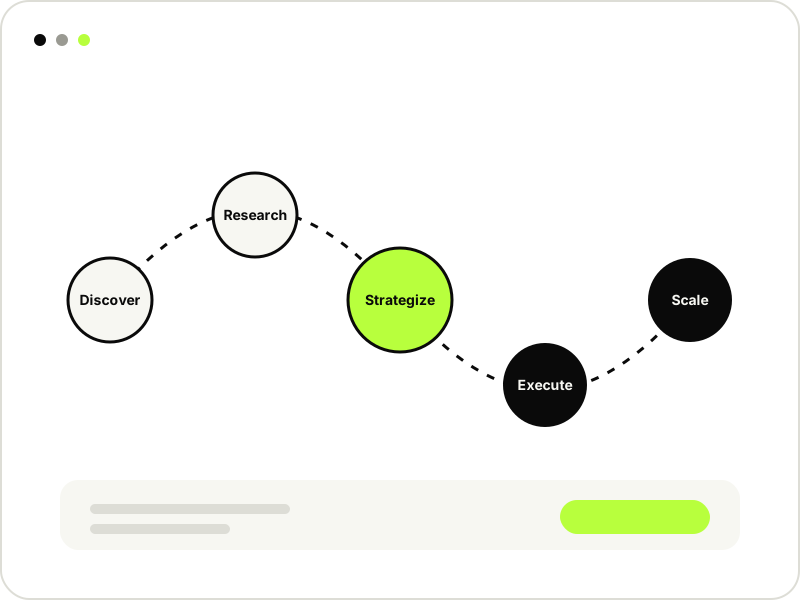
Tracking and tagging audits and Customer segmentation usually come first, since later work depends on getting them right. Dashboard and reporting builds and Marketing mix and channel analysis build on that foundation, and are where most of the ongoing, month-to-month effort tends to go once the initial setup is in place. Skipping the order and jumping straight to the later pieces is one of the more common reasons data-driven marketing underperforms relative to the effort put into it.
Do I need a data analyst on staff for this?
No — we can build and maintain the dashboards and reporting layer for you, and hand over documentation so your team can read and act on it independently.
How does data-driven marketing affect ad spend decisions?
It reallocates budget toward the channels and audiences with proven return, verified through consistent attribution, rather than the channel that simply reports the most impressions.
Can data-driven marketing work without a large customer database?
Yes; even a modest amount of clean, well-structured data outperforms a large amount of unreliable data. We prioritize accuracy over volume.
What privacy considerations apply to data-driven marketing in India?
Consent, data minimisation and secure storage are core principles we build into any tracking or CRM setup, in line with applicable data protection requirements.
How this connects to Performance Marketing
Data-Driven Marketing rarely works in isolation. It's closely connected to performance marketing. Marketing you only pay for when it produces a measurable result. Businesses that plan the two together, rather than treating them as separate budgets and separate teams, tend to get more out of both.
Where Data-Driven Marketing sits in a full marketing plan
Data-Driven Marketing rarely operates as a standalone effort inside a mature marketing program. It usually feeds data to, and draws budget decisions from, whatever else is running alongside it, so the businesses that get the most out of data-driven marketing are the ones who plan it as part of a wider system rather than a siloed line item with its own separate goals and its own separate reporting.
Signs it's working
The earliest reliable signal that data-driven marketing is on track usually isn't a headline metric moving, it's cleaner data: consistent tracking, a shrinking list of open questions about what's driving results, and a team that can explain, in plain language, why last month's numbers looked the way they did. The headline metric tends to follow once that foundation is solid.
Signs it's not working
The clearest warning sign isn't a bad month, individual months are noisy, it's a program where nobody can explain why performance moved, where the same questions keep coming up unanswered, or where more budget is proposed as the fix to every problem regardless of what the data actually shows.
What changes between month one and month six
Early on, most of the value in data-driven marketing comes from getting the basics right: tracking, a clear baseline, and a first round of tracking and tagging audits. By month six, the focus shifts toward refining what's already shown signal and quietly retiring whatever hasn't, which is usually where the more meaningful gains start to show up in the numbers that matter.
FAQs
Where do most data-driven marketing programs start?
With a tracking and tagging audit — confirming that conversions, revenue and key events are actually being recorded correctly before any optimization decisions are made on top of that data.
What is first-party data and why does it matter now?
First-party data is information you collect directly from your own customers and website visitors. As third-party cookies are phased out, it's becoming the most reliable foundation for targeting and personalization.