Insights · Internet Marketing
Step-by-Step: The Internet Marketing Process Explained
A clear, step-by-step breakdown of how a well-run internet marketing program actually operates.
By the Pinwheel team · · 770 words
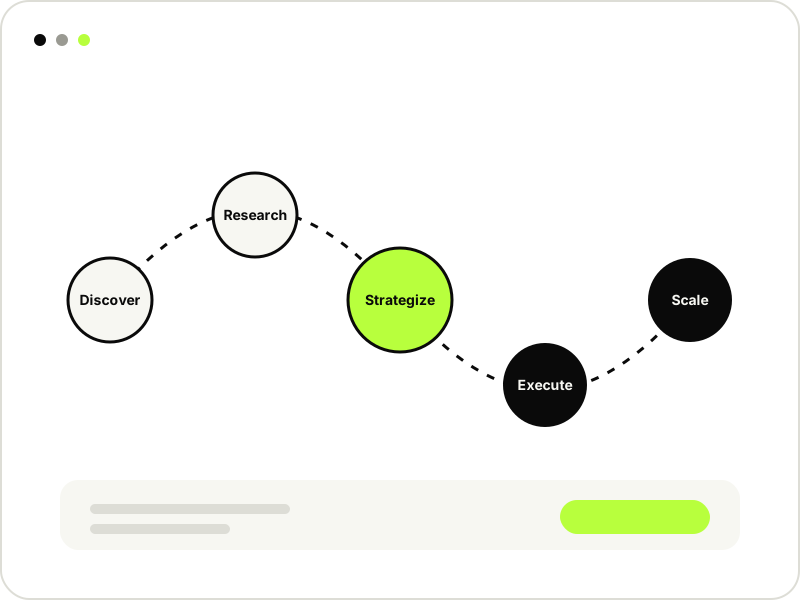
1. Discover
Understand the business, audience and current performance before recommending anything.
2. Research
Analyze competitors, Search engines data and audience behaviour to find the real opportunities.
3. Strategize
Build a plan across website development guidance and the other relevant disciplines, tied to specific goals.
4. Execute
Launch the agreed internet marketing activity, tracked from day one so results are measurable.
5. Optimize
Review performance on a regular cadence and adjust budget and creative toward what's working.
6. Scale
Expand what's proven into new channels, audiences or budget once the pattern is consistent.
The channels that carry most of the work
In a typical internet marketing program, Search engines and Display networks carry most of the day-to-day activity, while Email and Business directories tend to support specific parts of the funnel rather than running as standalone efforts. Understanding which tool is doing which job makes it much easier to diagnose a program that isn't performing, rather than assuming the whole approach needs to change when usually only one piece does.
How the pieces fit together
Website development guidance and Search engine marketing usually come first, since later work depends on getting them right. Directory and citation management and Email marketing setup build on that foundation, and are where most of the ongoing, month-to-month effort tends to go once the initial setup is in place. Skipping the order and jumping straight to the later pieces is one of the more common reasons internet marketing underperforms relative to the effort put into it.
How does internet marketing support offline sales?
Search and directory visibility drive research and discovery even when the eventual purchase happens in a store or over the phone, so tracking enquiries — not just online sales — matters.
Can internet marketing work with a limited budget?
Yes — many foundational activities (listings, on-page SEO, email list building) cost time rather than large media budgets, and can be sequenced before paid channels are added.
How do you prioritize which internet marketing activity to do first?
We look at where you're currently losing the most opportunity — often a missing or broken conversion path — and fix that before adding new traffic sources.
Do you build websites as part of internet marketing?
We advise on structure, SEO and conversion elements for a website and can coordinate with your developer or design partner, or refer one, as needed.
How this connects to Digital Marketing
Internet Marketing rarely works in isolation. It's closely connected to digital marketing. The full-funnel digital marketing engine behind sustainable growth. Businesses that plan the two together, rather than treating them as separate budgets and separate teams, tend to get more out of both.
Where Internet Marketing sits in a full marketing plan
Internet Marketing rarely operates as a standalone effort inside a mature marketing program. It usually feeds data to, and draws budget decisions from, whatever else is running alongside it, so the businesses that get the most out of internet marketing are the ones who plan it as part of a wider system rather than a siloed line item with its own separate goals and its own separate reporting.
Signs it's working
The earliest reliable signal that internet marketing is on track usually isn't a headline metric moving, it's cleaner data: consistent tracking, a shrinking list of open questions about what's driving results, and a team that can explain, in plain language, why last month's numbers looked the way they did. The headline metric tends to follow once that foundation is solid.
Signs it's not working
The clearest warning sign isn't a bad month, individual months are noisy, it's a program where nobody can explain why performance moved, where the same questions keep coming up unanswered, or where more budget is proposed as the fix to every problem regardless of what the data actually shows.
What changes between month one and month six
Early on, most of the value in internet marketing comes from getting the basics right: tracking, a clear baseline, and a first round of website development guidance. By month six, the focus shifts toward refining what's already shown signal and quietly retiring whatever hasn't, which is usually where the more meaningful gains start to show up in the numbers that matter.
The bottom line
Getting internet marketing right is less about finding one clever tactic and more about consistency: clear goals, honest measurement, and a willingness to adjust when the data says something isn't working. Businesses that treat it as an ongoing discipline rather than a one-off campaign are the ones who see it compound into a genuinely lower cost of growth over time.
FAQs
Is internet marketing still a relevant term?
The discipline is very much alive even if 'digital marketing' has become the more common label; the fundamentals — being visible and credible online — are unchanged.
What internet marketing basics should every business get right first?
A working, mobile-friendly website, accurate Google Business Profile listing, a way to capture enquiries, and basic analytics to see where visitors come from.